
Process guide
Double-shot vs dye-sub: an honest comparison.
We run both processes in the same building, so we have no incentive to oversell either one. Here is how they actually differ — and the decision rule we give buyers who ask.
Double-shot: legend is a second molded plastic — maximum crispness and absolute permanence, higher tooling cost and MOQ, limited to solid legend colors. Dye-sub: legend is dye diffused into PBT — permanent for practical purposes, supports gradients and complex artwork, lower MOQ, but legends must be darker than the cap (unless reverse dye-sub). Rule of thumb: brand-consistent solid legends at volume → double-shot; artwork-driven or smaller runs → dye-sub.
How each process works
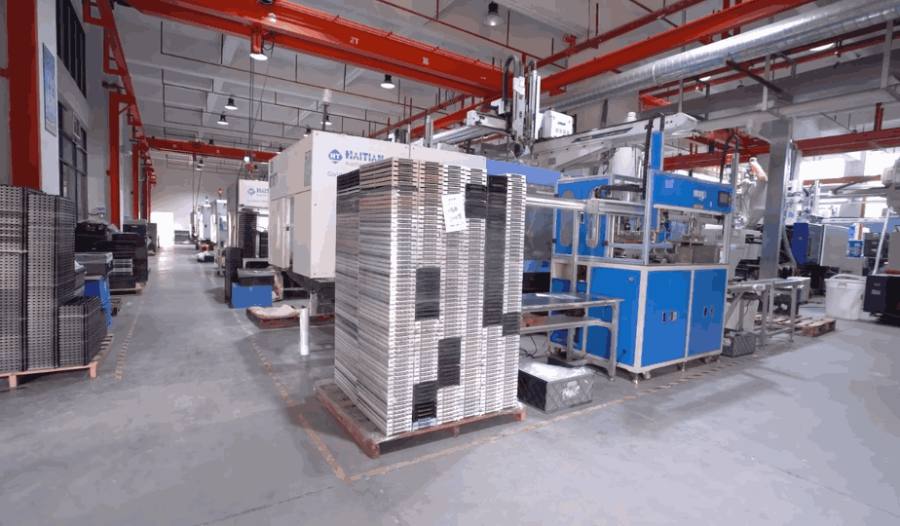
Double-shot molding injects the legend as a separate plastic into the cap mold, then molds the cap body around it. The legend goes all the way through the top surface — you could sand the cap and the legend would still be there.
Dye-sublimation uses heat to diffuse dye below the surface of a PBT cap. The legend is inside the plastic, not on it, which is why it cannot rub off like pad printing.
Side by side
| Double-shot | Dye-sublimation | |
|---|---|---|
| Legend durability | Absolute — molded plastic | Permanent in normal use; dye can fade under extreme UV |
| Legend sharpness | Sharpest edges possible | Very good; slight softness at tiny sizes |
| Color capability | Solid colors per shot | Gradients, multicolor art, full-surface designs |
| Light legend on dark cap | Yes, natively | Only via reverse dye-sub |
| Materials | ABS or PBT | PBT (dye needs it) |
| Tooling cost | High — mold inserts per legend set | None beyond fixtures |
| Typical MOQ | Higher (≈500–3,000+ sets) | Lower (≈100–500 sets) |
| Best for | Brand lines, OEM volume, shine-through alternatives | Group buys, artwork sets, first runs |
The decision rule we give buyers
If your set is defined by typography — clean, solid, brand-consistent legends that must look identical across reorders — and volume supports the tooling, choose double-shot. If your set is defined by artwork — gradients, scenes, novelty caps — or you are validating demand with a smaller run, choose dye-sub and keep double-shot as the reorder upgrade. MOQ math for both is covered in our MOQ guide.
FAQ
Which lasts longer, double-shot or dye-sub?
Both are permanent by design: double-shot legends are molded plastic, dye-sub legends are dye inside the plastic. Neither rubs off with typing.
Can dye-sub print light legends on dark caps?
Only reverse dye-sub can — it dyes everything except the legend, leaving the legend in the base color.
Why is double-shot more expensive?
Mold inserts per legend set plus a machine changeover per colorway: fixed costs that raise unit price and MOQ versus printed processes.