
Manufacturing process
Custom UV-printed keycaps.
UV printing lays full-color, photographic artwork straight onto the cap — the most flexible way to put detailed, multi-color designs on almost any material, at a low minimum.
Process: ink jetted onto the cap and cured instantly by UV light — full color, on the surface. Materials: PBT, ABS, PC. MOQ: 500 sets. Production: 15–20 days (standard orders). Best for: full-color and photographic artwork, multi-color logos, designs on ABS / PC where dye-sub can't go.
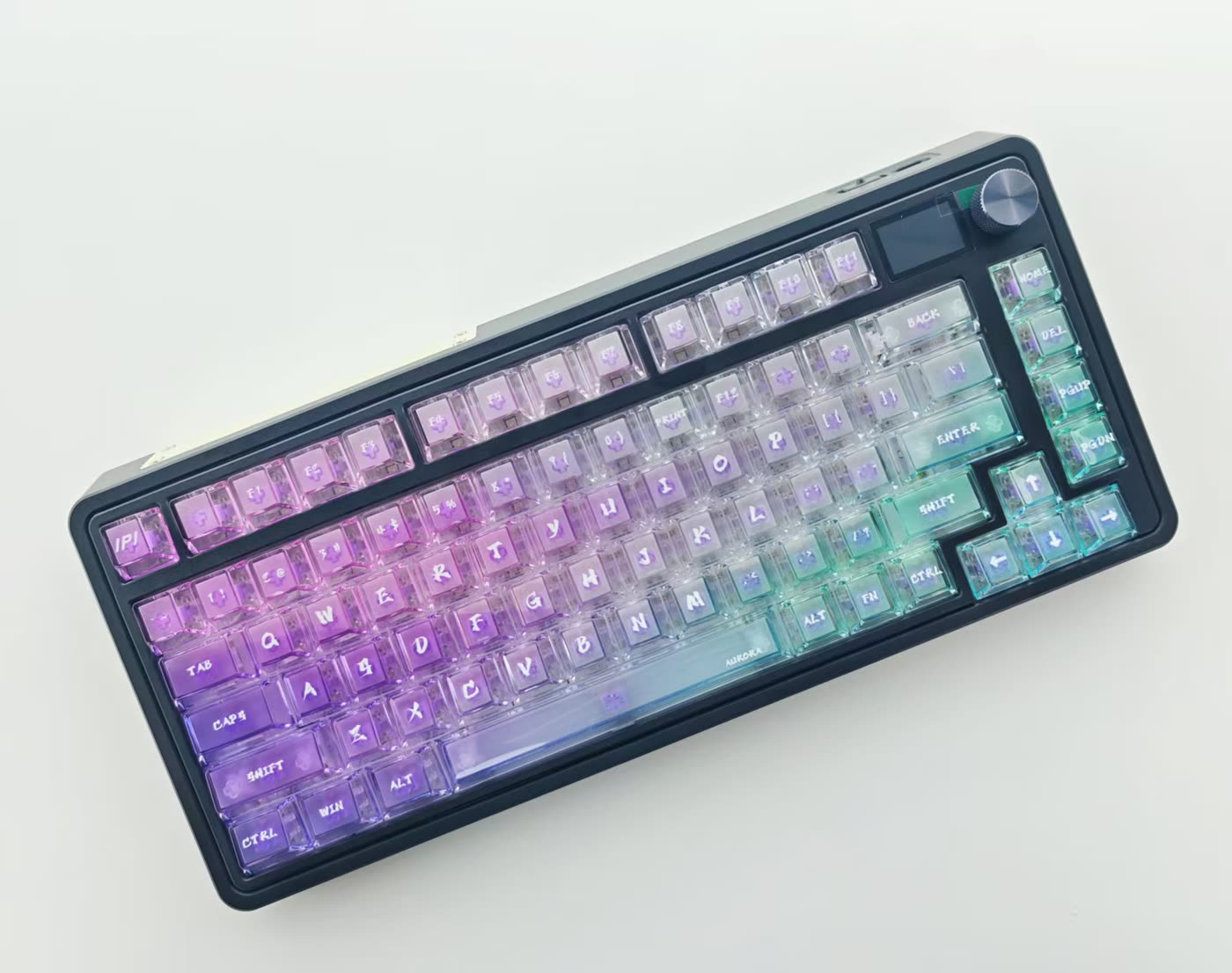
How UV printing works
A printer jets ink directly onto the keycap and cures it on contact with UV light. Because the ink cures instantly, it can build up crisp, full-color, photographic detail on the cap surface — and unlike dye-sublimation, it isn't limited to PBT, so it prints on ABS, PC and specialty caps too. As a printed process, it needs no per-legend mould tooling.
What UV printing is best for
- Full-color & photographic artwork — the widest color and detail range of the printed processes.
- Multi-color logos — where silk-screen's one-color-at-a-time approach is limiting.
- ABS, PC and specialty materials — where dye-sub isn't possible.
- Small, fast runs — low minimum, quick sampling, easy design changes.
UV vs the other processes
UV printing wins on material flexibility and vivid full color, but the ink sits on the surface, so for legends that live inside the plastic choose dye-sublimation (PBT) or molded double-shot. For crisp single-color logos on specialty caps, silk-screen is the most economical. Minimums across processes are in our MOQ guide.
FAQ
What is UV printing on keycaps?
Ink jetted onto the cap and cured instantly by UV light — full-color, high-detail artwork on the surface, on PBT, ABS or PC.
What is the MOQ for UV-printed keycaps?
500 sets. As a printed process there are no per-legend mould inserts, so the minimum is far lower than double-shot.
UV printing vs dye-sub?
UV prints full color on many materials (incl. ABS/PC) on the surface; dye-sub diffuses dye inside PBT for more durability but only on PBT.